
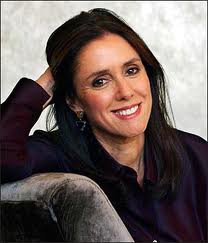
Patrick Healy recently wrote in The New York Times about Julie Taymor breaking her silence on Spider-Man: Turn Off the Dark, Broadway’s most expensive (and probably most questioned) musical in history.
In his article he states that she “criticized her former producers on Saturday afternoon for relying on audience focus groups and said that the rise of Twitter and blogs for instant theater criticism was damaging to shows.”
I have to disagree. While the show has been targeted as being dangerous (granted, there are numerous accidents and multiple hospital visits related to the production) the “rubber necking” effect has been in (pardon the pun) full swing.
In fact, in December, just after actor Christopher Tierney fell nearly 30 feet into the orchestra pit, Michael Reidel claimed:
“Ironically, all of the accidents and negative media attention have greatly spurred once-anemic ticket sales. In recent weeks, people have lined up to buy seats, which range in price from $67.50 to $140.”
He went on to suggest that some theatre-goers buy tickets to the show just for the chance to see what might happen. He writes that after being told what happened to Tierney, a 23-year-old student from North Carolina replied, “‘Another accident? I hope no one else gets hurt, but it is part of the allure of going.’”
Is that why we want people going to the theatre? No. Not really. But it didn’t negatively impact sales. People are naturally drawn to the difficult other’s experience… Schadenfreude. Hell, even Avenue Q, the Broadway musical which has seen a very successful post-Broadway return to Off Broadway, has a song about it.
This was true long before Spider-Man came to Broadway. Ken Mandelbaum even wrote a book about Broadway disasters, Not Since Carrie: Forty Years of Broadway Musical Flops. Frank Rich wrote in The New York Times that the book was “Highly readable…strong opinions backed up by solid judgment… full of entertaining backstage reportage.”
In Healy’s article, Taymor went on to argue that by bringing focus groups in to see the show and provide feedback, the producer’s were crossing a dangerous threshold. “‘It’s very scary if people are going more towards that, to have audiences tell you how to make a show,’ she said. ‘Shakespeare would have been appalled. Forget about it. It would be impossible to have these works come out because there’s always something that people don’t like.’”
I would argue that this is part of the changing face of the theatre world. It is the world we are in. Advances in technology, and the ability for every person to immediately express their opinion through services like Twitter, Facebook or blogging, should be viewed as valuable assets to theatre and not as detrimental roadblocks to creativity… particularly in the commercial world where your bottom line is determined by the enjoyment of hundreds of people every day. Again, referencing Healy’s article, “’Twitter and Facebook and blogging just trump you,’ Ms. Taymor said during a moderated discussion at the annual meeting of the Theater Communications Group, an umbrella organization of regional and nonprofit theaters. ‘It’s very hard to create. It’s incredibly difficult to be under a shot glass and a microscope like that.’”
Well Ms. Taymor, I hate to break it to you, but, to quote another rocker from across the pond, “This is the world we live in and these are the hands we’re given.” Hopefully these new tools will only improve our dialog and appreciation of the art and prove themselves worthy of your consideration in your next adventure. I know I’m interested to see how they are used for good. You?


 Tommy Karr